French manufacturer of professional kitchen equipment since 1947
French manufacturer of professional kitchen equipment since 1947
French manufacturer of professional kitchen equipment since 1947
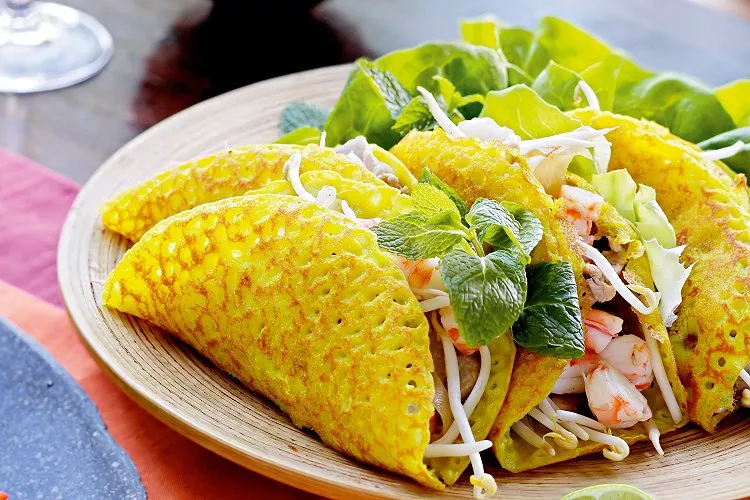
In Vietnamese, Banh xeo means “sizzling cake”. It was given this name in reference to the sound of the rice flour when the crêpe fries in a hot pan. Nobody really knows where and when Banh xeo was born. It is thought to date back to the days of the settlers of French Indochina, just like Banh mi, the Vietnamese sandwich derived from the baguette.
Banh xeo is thought to come from central Vietnam (Hué), the birthplace of King Quang Trung of the Tay Son dynasty, and from southern Vietnam, the main area where this dish is enjoyed. In the 18th century, in the Tay Son era, Banh xeo was already much loved. On the second and sixteenth days of each lunar month, the inhabitants would replace their usual cooked rice dish with these Vietnamese crêpes.
Across the different regions of Vietnam, the recipes vary… large, medium or small, crispy or soft, filled with meat, vegetables or seafood, the varieties are numerous.
Here are some of the particularities of the southern, northern and central regions of Vietnam.
Southern Vietnam region: coconut milk is added to the batter to make the crêpe even more fragrant.
Northern Vietnam region: beer is included to give the batter a little extra kick. The crêpe is then rolled up in mustard leaves or lettuce leaves. It is all served with a few mint and basil leaves and then dipped in a fish sauce.
Central Vietnam region: the crêpes, which are thicker in this recipe, are called “banh khoai”, “banh canh” or “banh khot” depending on the central regions.
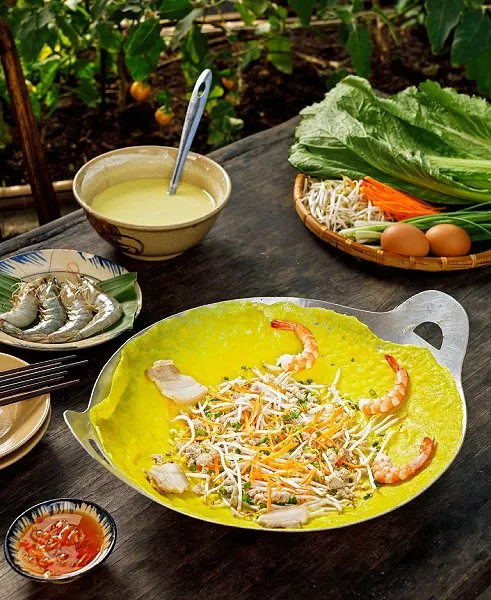
Put the rice flour and a teaspoon of turmeric powder into a bowl and mix with around 250 ml of water, 100 ml of beer and 50 ml of coconut milk.
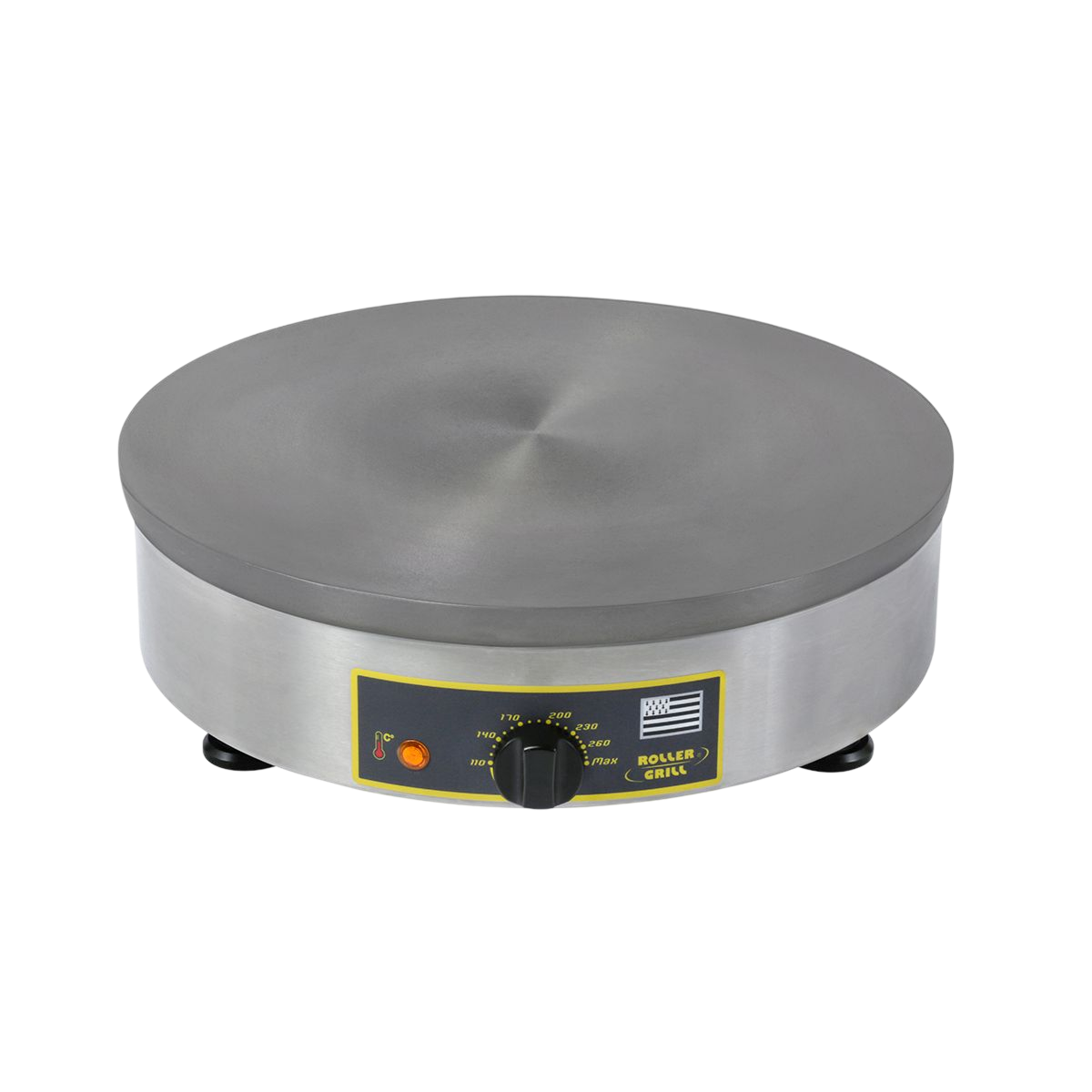
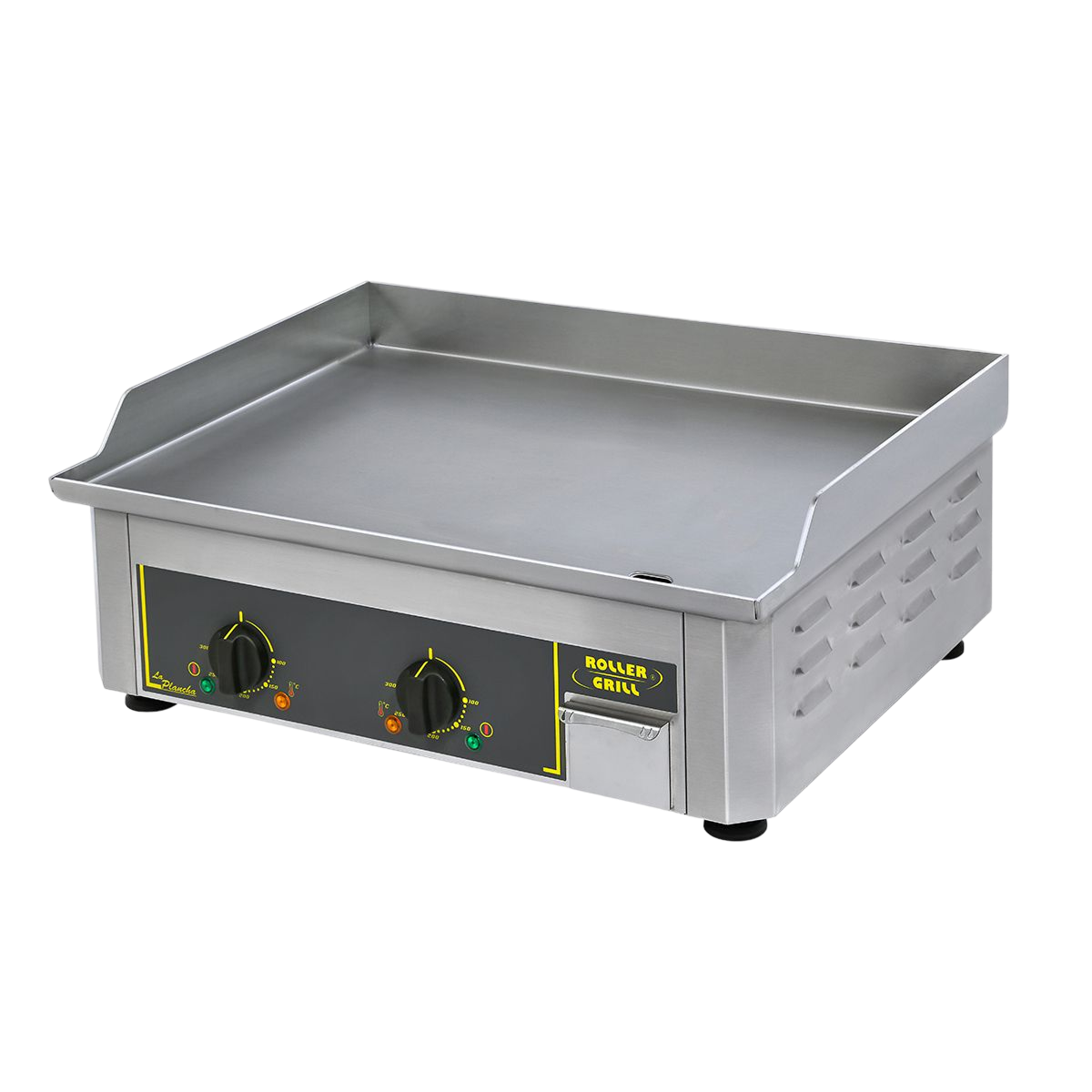
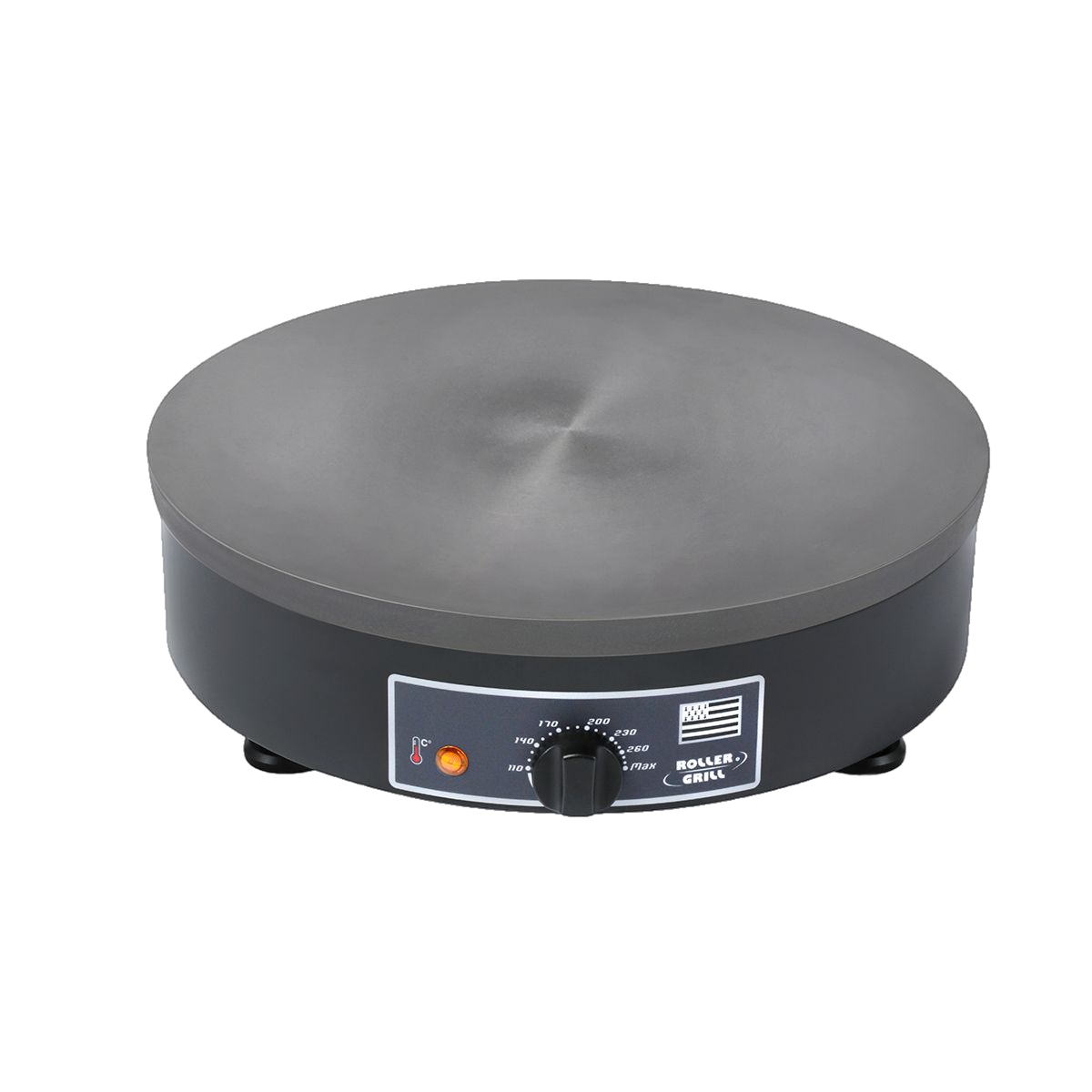
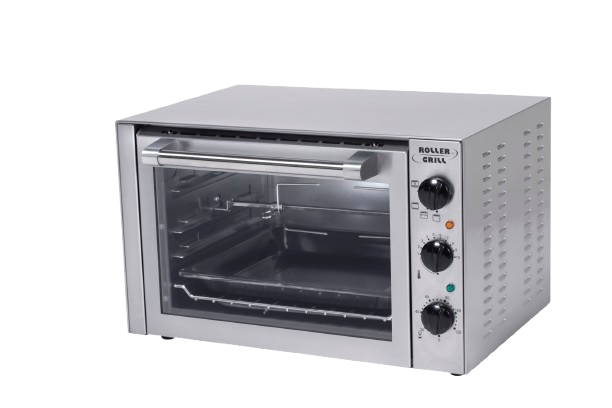
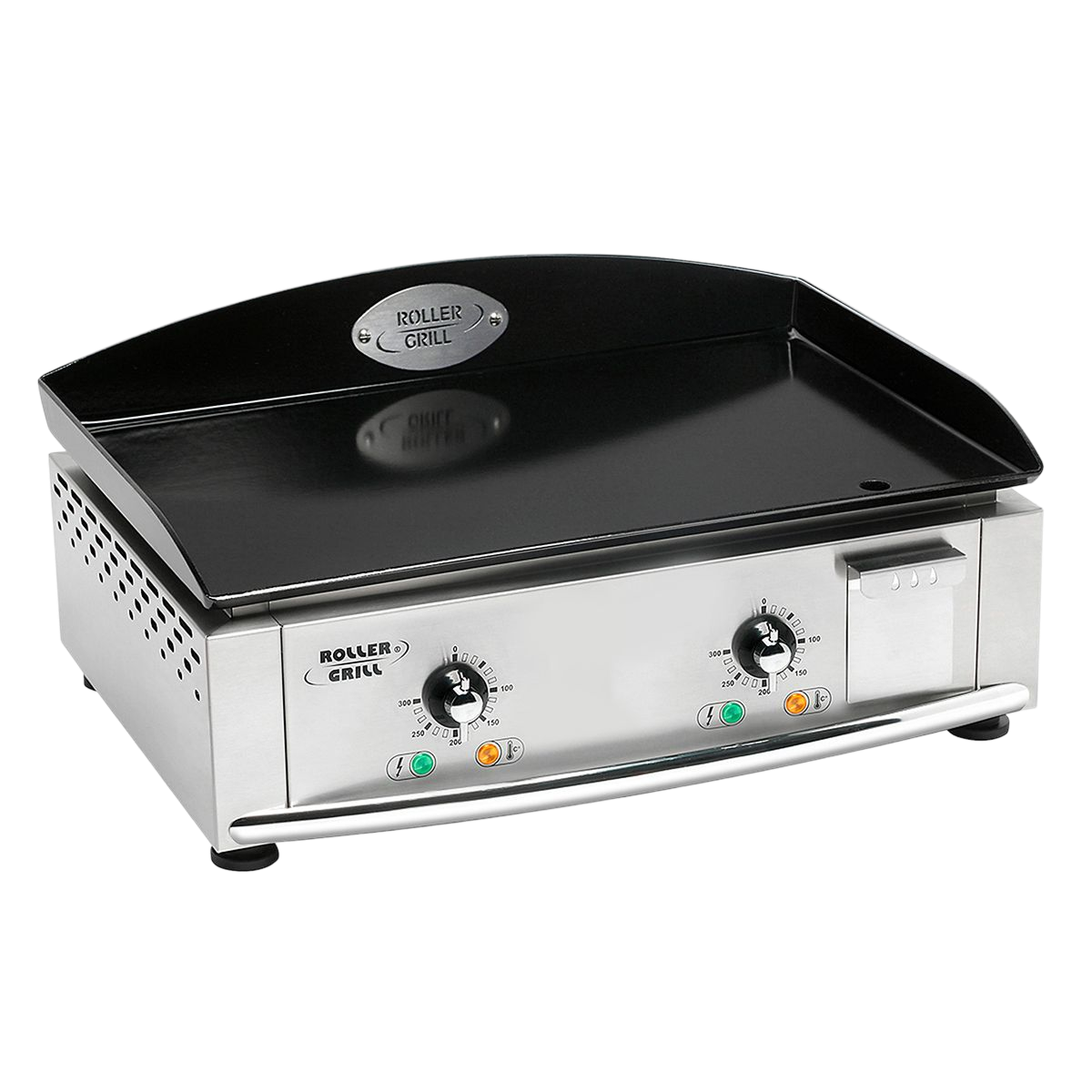
To cook Banh xeo on a professional crêpe machine, simply oil the cast iron plate and spread a thin layer of batter over the cooking surface. Add the filling of your choice. Once the edges start to lift, allow around 3 minutes of cooking time. And your Banh xeo is ready to serve!
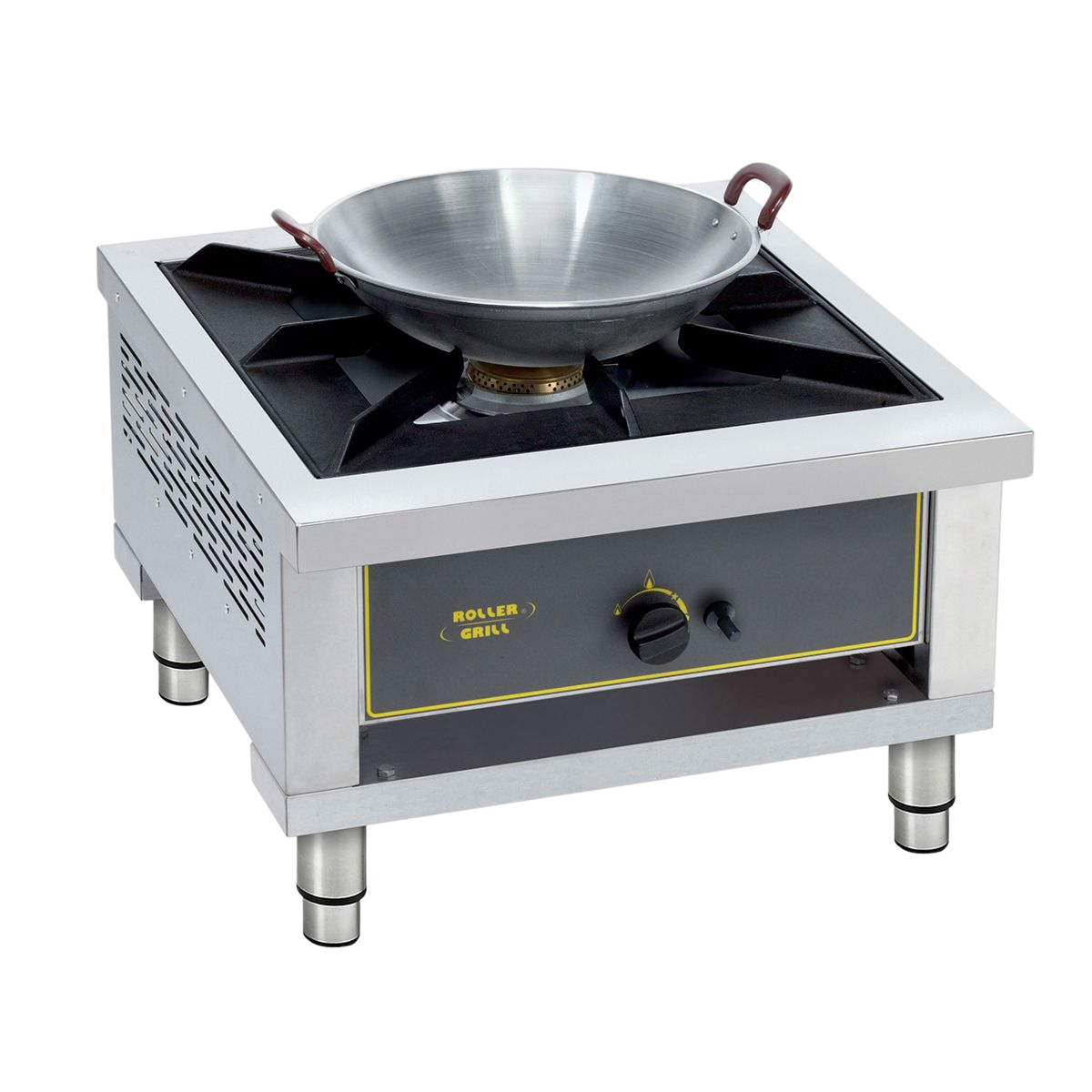
To cook Banh xeo in a wok, oil the wok and, after mixing the batter well, pour in a small amount while tilting the pan vigorously to create a thin layer covering it.
Then turn the wok to spread the batter evenly, particularly at the edges. Add the filling of your choice, then cover the wok with a splatter guard so that the crêpe does not go soft.
You will notice that after 2 minutes the edges lift slightly; add a few drops of oil and cook for around 4 minutes. Your Banh xeo is ready!
Banh xeo can be served with savoury fillings, according to your taste. Here are a few ideas to awaken your taste buds:
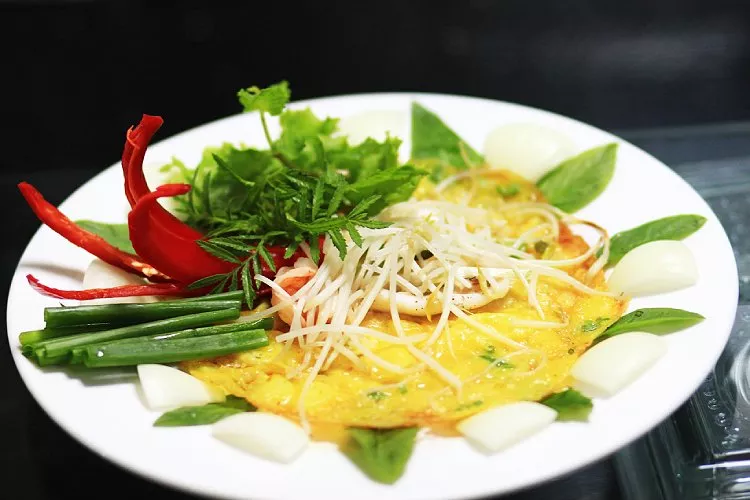
At lunchtime and in the evening, as a main course, Banh xeo delights young and old alike.
If you have not yet planned a trip to Vietnam, fear not: you can still find Banh xeo flour in supermarkets and specialist shops. It even comes ready-made in sachets!
Banh xeo and French crêpes have few similarities, apart from the fact that they bring families and friends together around a convivial meal.
Banh xeo is only eaten with savoury fillings and is folded in half like a taco. Its cooking method also differs from French crêpes, which are traditionally cooked in a pan or on an electric or gas crêpe machine, whereas Banh xeo is generally cooked in a wok with its fillings.
Banh xeo is therefore a relatively easy dish to prepare. It perfectly illustrates the contrasts of tastes and flavours in Vietnamese gastronomy.