


Why is the plate coating so crucial for a plancha?
Through its friction coefficient, the coating promotes heat transfer to the food being cooked.
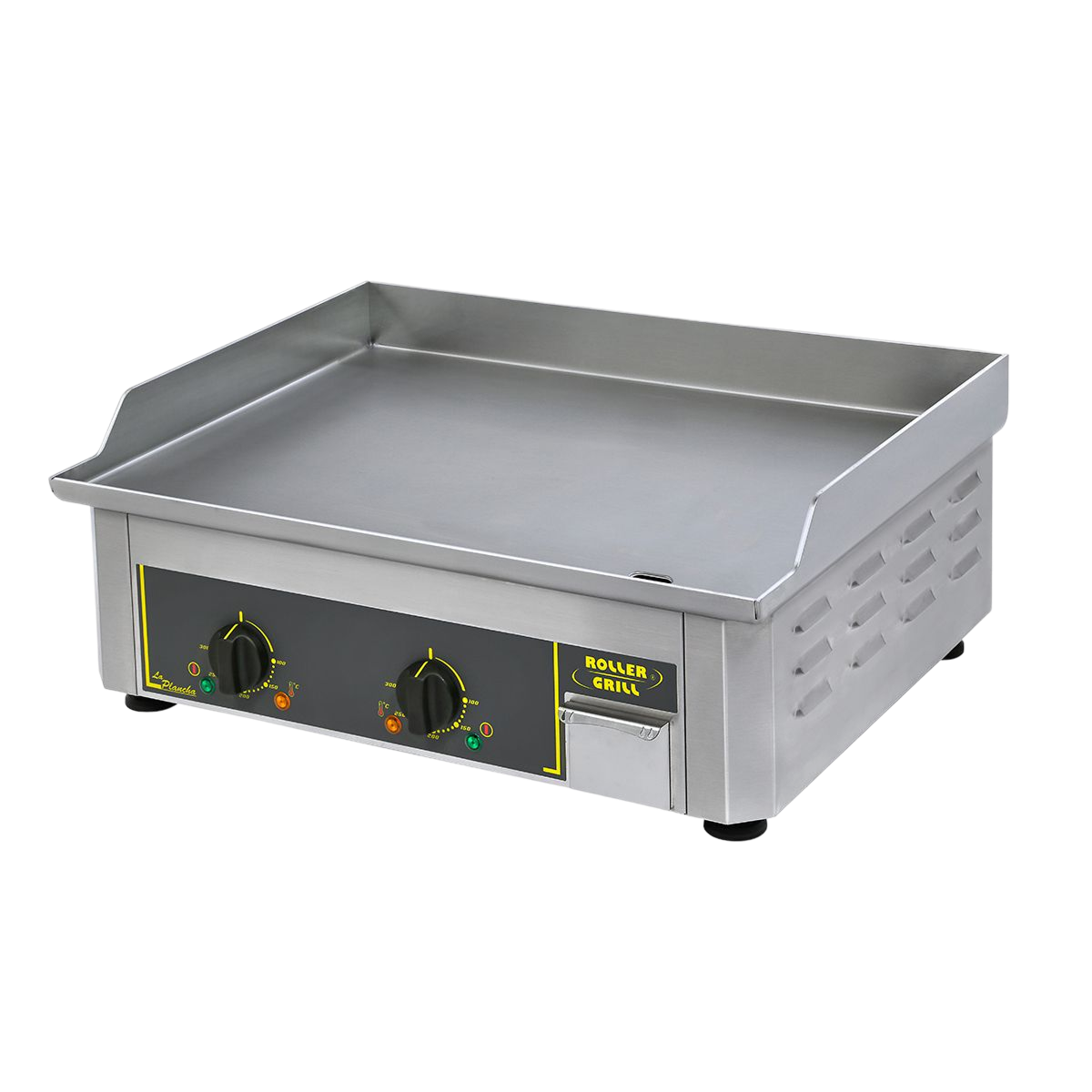
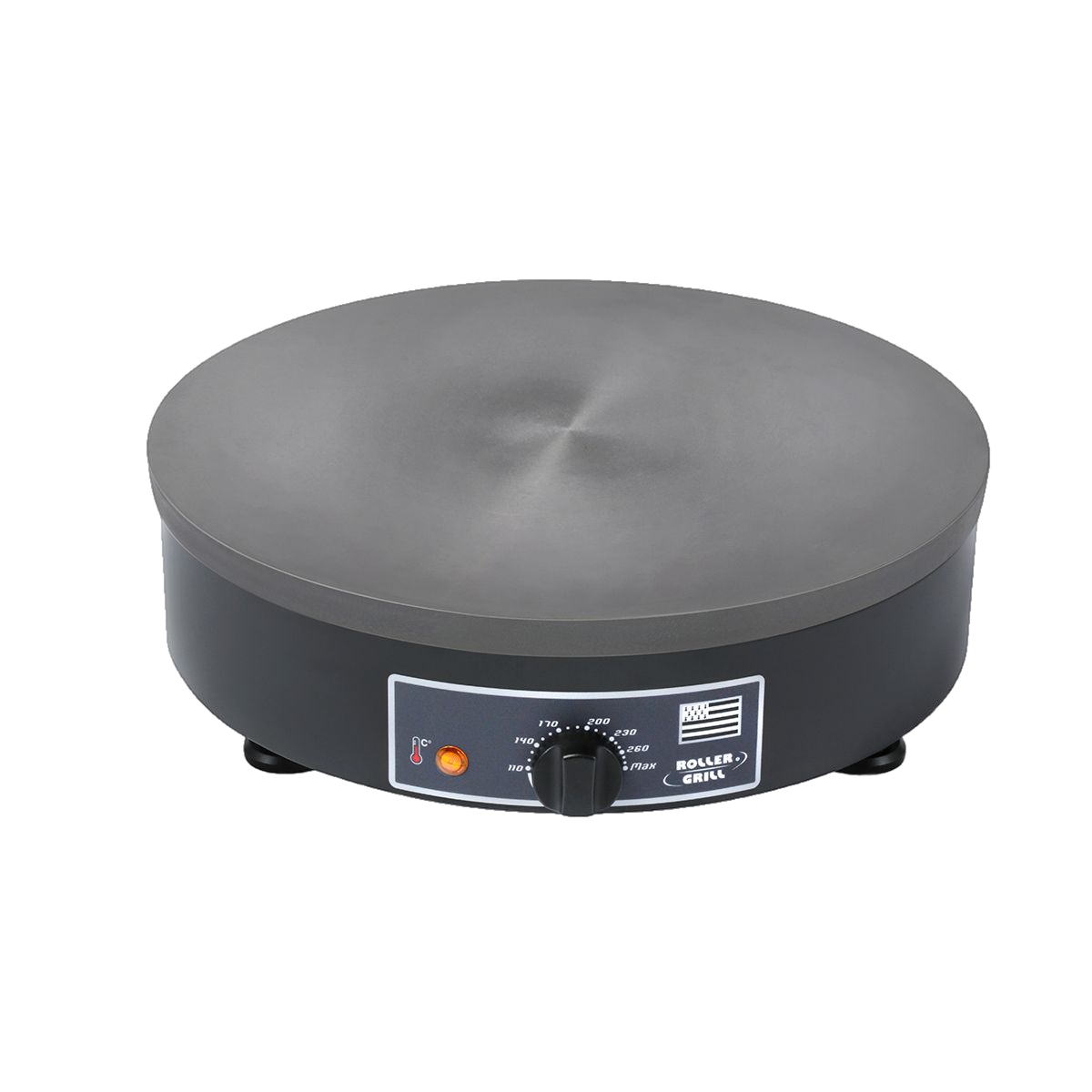
Beyond the piece of kitchen equipment itself, the plancha also refers to the cooking method. The plancha is THE ultimate form of contact cooking. Contact cooking depends on the friction coefficient between the food and the plate coating. The more points of contact the food has with the surface coating, the better the food can adhere to the plate and the better the heat transfer to the product being cooked. The plate coating must therefore be a good heat conductor. It is not non-stick, allowing optimised contact cooking with just a drizzle of olive oil or a little fat.
The coating must offer good mechanical resistance.
The plate material must be particularly resistant to heat, which can exceed 300 °C. It must also withstand all the possible temperature variations: whether when cold food is placed on a very hot plate, when deglazing, or during cooking at every temperature level (cooking fine cuts of meat at high temperature, simmering vegetables, keeping food warm, reheating and so on). It is best to favour materials and coatings with good mechanical resistance to avoid the risk of corrosion in damp environments and scratches caused by metal utensils.
An easy-to-clean coating should be favoured for the plancha’s durability.
Even lightly greased plates need cleaning after use. The smoother the plate coating, the easier it is to clean. Easy, regular cleaning is the watchword for a plancha’s durability. Ease of cleaning is an undeniable advantage in the eyes of all amateur cooks and catering professionals alike. It is also one of the criteria when choosing a plancha and deciding which coating to choose.
Rough or smooth coating: which should you favour?
Cast iron is the historic plancha material.
Cast iron is the plancha’s original material. Originally, in the 19th century, the plancha was a large-surface cast iron plate placed over a wood fire. This raw cast iron plate is now mounted on butane/propane gas burners with a thermocouple safety device or on thermostat-controlled heating elements. The cast iron plate has excellent thermal inertia: it accumulates, releases and spreads heat across the entire surface, even once the plancha is switched off. It allows gentle, even cooking of food. Raw cast iron only becomes malleable at very high temperatures, from 700°C upwards. It is a particularly robust material. Not to be confused with cast aluminium, a light alloy that performs poorly when it comes to cooking. While the cast iron plancha still has its place in traditional kitchens and offers the best value for money, it is gradually being abandoned nowadays because of its drawbacks: a long preheating time (15 to 20 min) and a rough, even porous surface that is not always easy to clean.
Steel, less rough, has taken over in recent decades and is replacing cast iron plates.
By way of comparison between cast iron and steel, the latter offers two advantages over raw cast iron. First of all, this material is smoother: it improves contact between the plate and the food being cooked, and it also makes cleaning easier. In addition, this material reaches temperature in just 10 min. While some models are fitted with rolled steel plates, Roller Grill, the French manufacturer of professional planchas, builds its high-performance steel planchas with particularly thick decarburised steel plates (10 mm). The decarburised steel is polished for direct heat transfer and better searing of food.
Chrome, stainless steel and enamel are all smooth materials with sometimes contrasting qualities.
Chrome is the best medium for heat transfer, but it must not be confused with hard chrome!
With its perfectly smooth finish, chrome is the best coating for contact cooking. It ensures excellent heat transfer at every point of contact with the food being cooked. Roller Grill uses it to manufacture chromed steel planchas: the steel is chromed through 3 polishing passes. It is the best decorative chrome for heat transfer, despite some discolouration and delicate upkeep. Be careful not to confuse the chromed coating with the hard chrome used in the design of teppanyaki plates. Before deciding to buy a chrome plate, you need to get to grips with the question: What is the difference between a chrome plancha and a teppanyaki?
Stainless steel is THE trendy cooking surface, very easy to clean but a poor performer when it comes to cooking.
Many restaurateurs and cooking enthusiasts want to ride the latest wave: the stainless steel plancha. While its robustness and very smooth finish free the user from cleaning chores, stainless steel is far from being a good heat conductor, the key factor in contact cooking. However, among the many offerings on the market, two stainless steel models stand out from the crowd. Discovering which is the best stainless steel plancha is bound to interest devotees of the stainless steel plate!
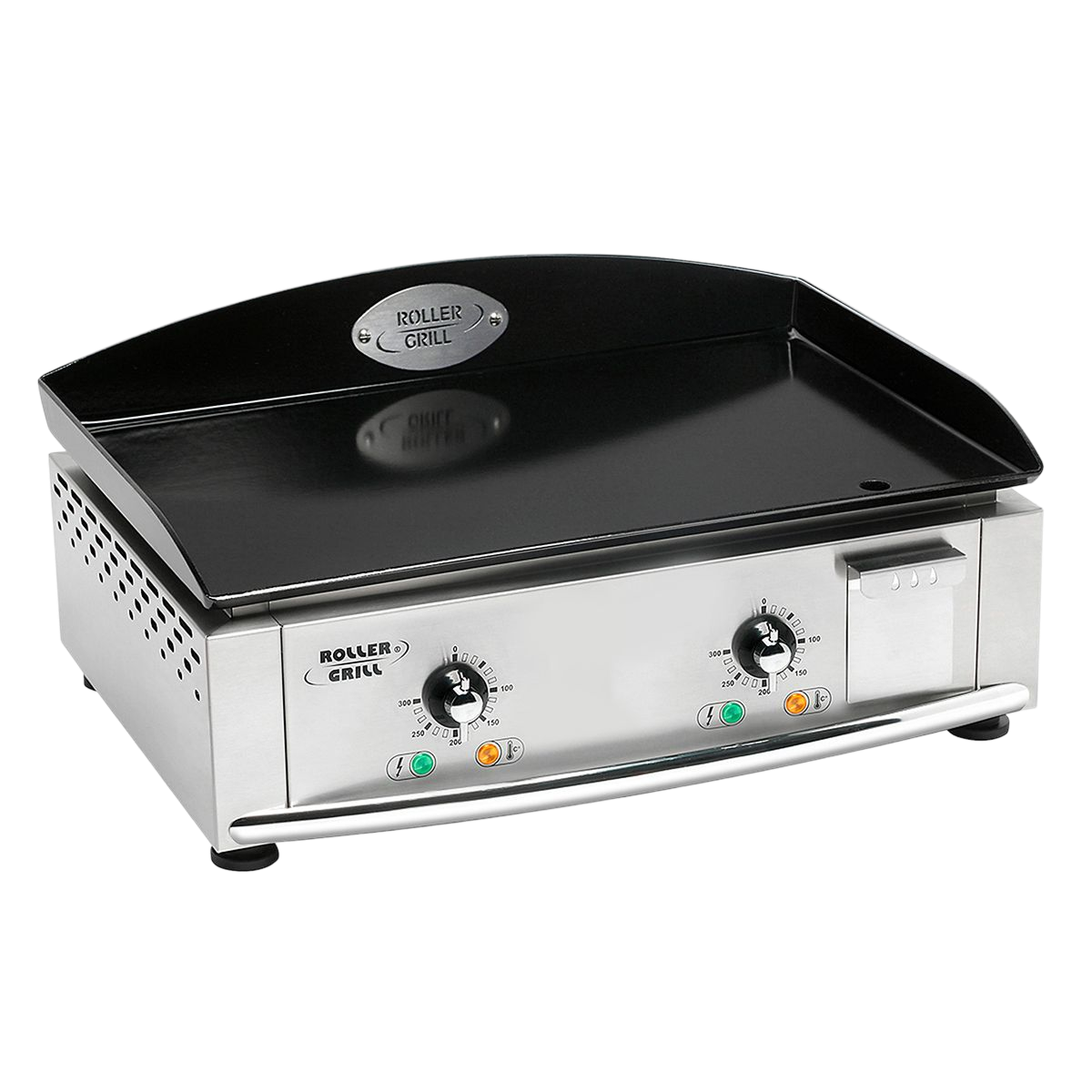
Enamel is the coating recommended by Roller Grill for its cooking quality and ease of cleaning.
As a manufacturer of professional planchas, Roller Grill recommends enamelled steel planchas. The plate is perfectly smooth and hard-wearing. High-quality enamelling allows very good heat transfer and perfect contact cooking. Thanks to its smooth finish and robustness, the enamelled plate is particularly easy to clean. Those still hesitating over choosing between a stainless steel plancha and an enamel plancha should think about the plancha’s cooking quality, the primary criterion when buying this piece of kitchen equipment, a true symbol of tasty, healthy cooking.