French manufacturer of professional kitchen equipment since 1947
French manufacturer of professional kitchen equipment since 1947
French manufacturer of professional kitchen equipment since 1947
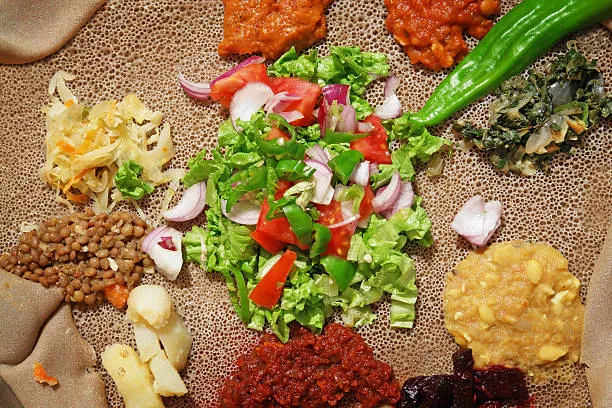
Injera is a kind of large crêpe cooked in Ethiopia and Eritrea. It serves as bread, plate and fork all at once. Handy!
This crêpe is made from teff, an endemic cereal. It only grows in these 2 countries, which explains why this crêpe is traditionally cooked there.
A bonus not to be overlooked: gluten-free teff grain has positive effects on health and is said, among other things, to be behind the performances of Ethiopian runners.
For delicious Injeras, you will need 200g of light teff flour, 200g of white flour, 200g of brown flour or millet flour, ¼ of a cube of yeast (around 10 g) and 1 litre of water.
The first step is to mix the flours in a bowl, then dissolve the yeast in a little water before pouring it over the flour.
Next, add 5 dl of water, mix and knead until you obtain a smooth, supple dough. Add the last few decilitres of water, then mix until the batter is even. If necessary, transfer the batter to a non-metallic bowl, cover it and leave it to rise for around 3 days at room temperature.
Pour off the water at the end of the 3 days of fermentation: it will have gathered on the surface of the batter. Thin the batter down with lukewarm water until it has the consistency of a crêpe batter. Then heat a non-stick frying pan without any fat.
Pour in the batter and lower the heat for around 30 seconds, just long enough for the crêpe to cook. As soon as bubbles appear, cover the pan and continue cooking for around 15 seconds. When the galette comes away from the edge, it is time to take the crêpe out of the pan.
The Injera galette is known for the layering of sauce on its underside.
Vegetable-based sauces: Shiro (chickpeas), Atkilt Wot (a mix of carrot, potatoes and cabbage), Azifa (lentils), Mesir Wot (a mix of lentils and a spicy berbere sauce), and Fasolia (a blend of green beans, carrots and caramelised onions).
Or meat-based sauces: Tibs (lamb, beef or mutton, doro wat (chicken and egg) and Kefto (raw minced meat).
Injera is both the basis of the meal, like bread for us, and the vessel onto which the sauces are poured.
You can enjoy injera crêpes by tearing off small pieces with your right hand, delicately wrapping up the sauces arranged on top.
Conviviality guaranteed!
Injera has little in common with the French crêpe. It is not rolled and is not made from the same ingredients. Its role as a “vessel” also differs.
What they have in common: they are both absolutely delicious!
The batter used for Injera must ferment for around 3 days, which gives it thickness and a texture that helps it soak up the sauces. Once cooked, the injera is placed on a low table and everyone helps themselves from the dish.
After 3 days of fermentation, simply pour the batter onto a non-stick pan, leave it to cook for a few seconds over a low heat and admire your handiwork!
What do you eat Injeras with (what accompaniment)? The Injera galette is served with a variety of sauces layered on top.
Mix all the necessary ingredients, place the mixture in a large container and cover it with cling film, then leave it to rest for a little over 48 hours in the fridge. It is then time to cook the crêpe and enjoy it with the sauce(s) of your choice.